
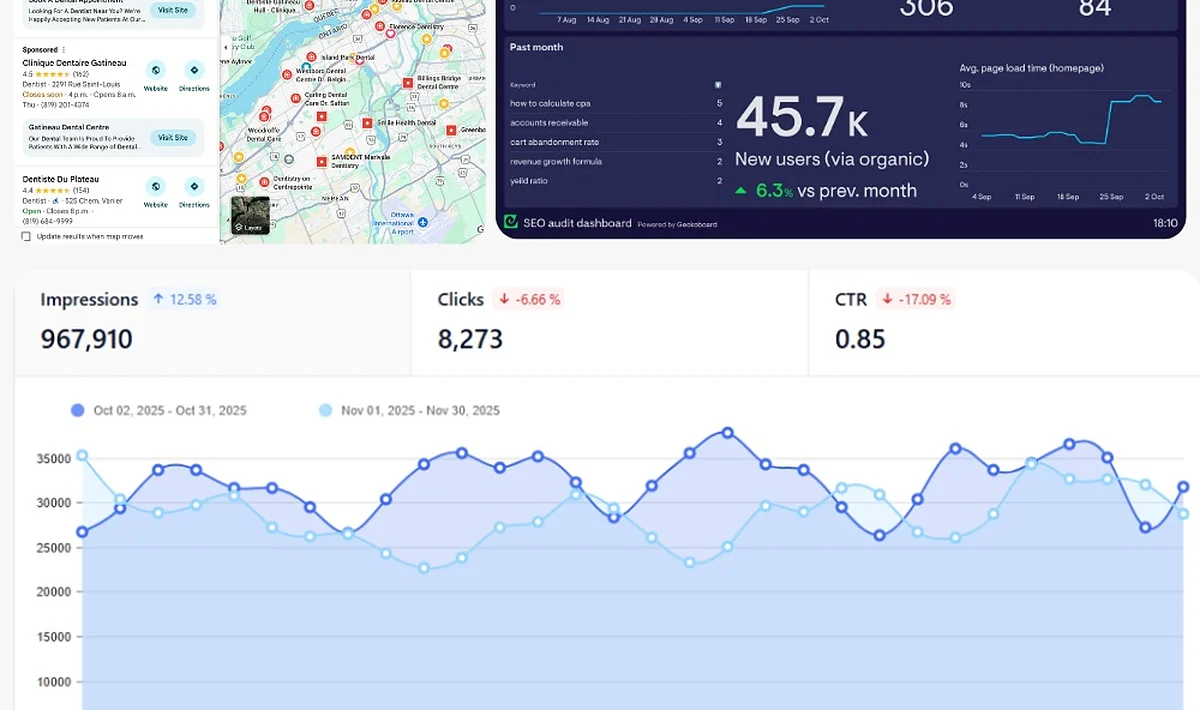
Most clinics have more data than they use. The goal of analytics is simple: know which marketing brings booked patients, so you can do more of it. You do not need ten dashboards for that.
Track the actions that matter
- Phone calls from ads, your website and your Google Business Profile.
- Form submissions and online booking requests.
- Clicks on call buttons and directions on mobile.
Set these up as conversion events in Google Analytics and in your ad accounts, so every channel reports the same actions.
Call tracking without recording everything
Tracking numbers show which source a call came from, plus time and duration. Recording is optional and should only be used with clear consent and a reason. For most clinics, source and duration are enough to judge campaigns.
Connect leads to bookings
A lead is not a patient. Ask the front desk to note the source of each new booking in your practice software or a simple shared sheet. Once a month, match booked patients to campaigns. This is where you learn your real cost per booked consult.
Use UTM tags consistently
Add UTM tags to links in ads, emails and social posts so analytics can tell them apart. Agree on a naming pattern once and stick to it.
A simple monthly report
- Calls and forms by source.
- Booked new patients by source.
- Spend and cost per booked patient for paid channels.
- Two or three decisions for next month.
If a report does not lead to a decision, it is too long.