
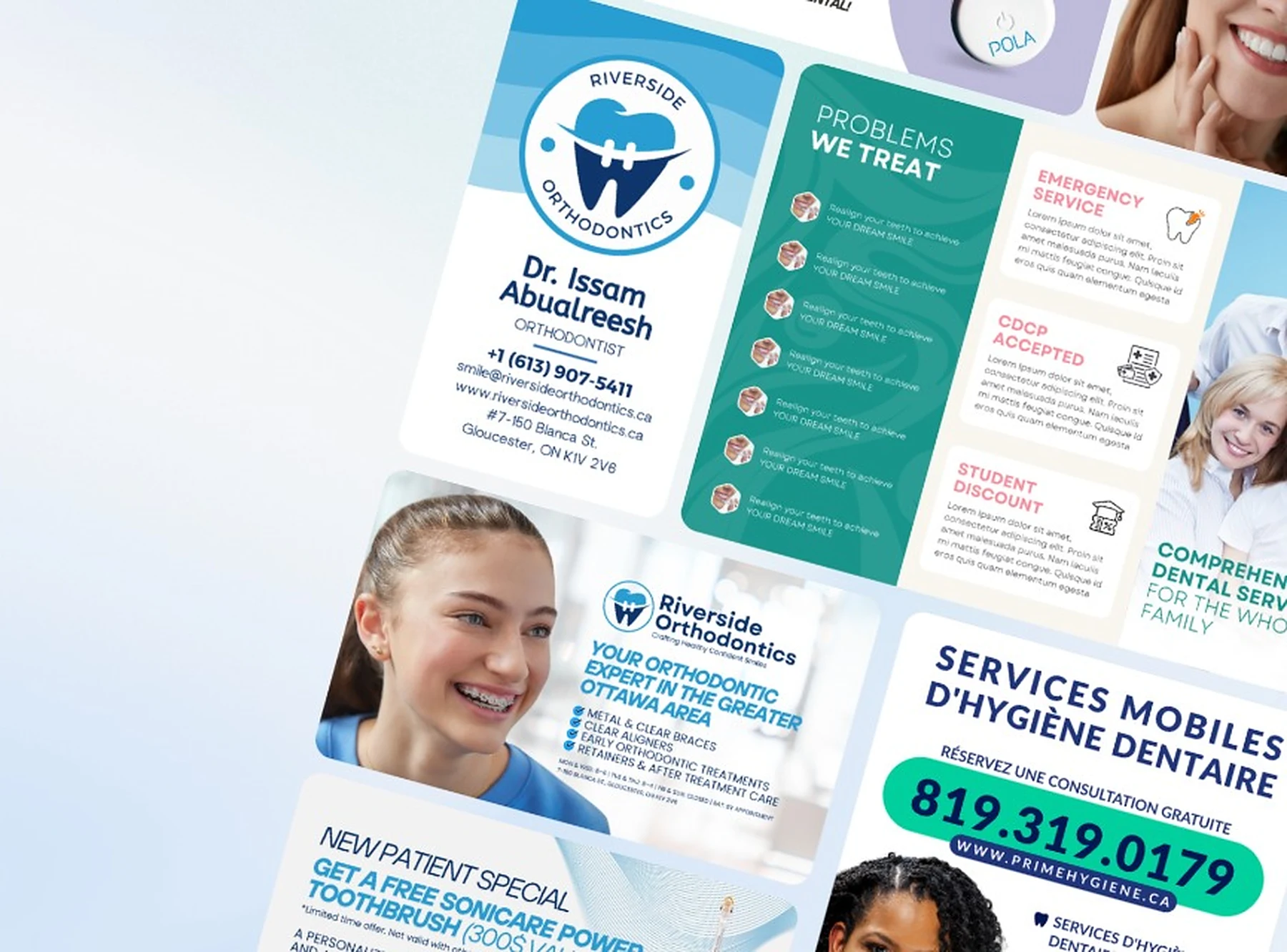
Print & direct mail for dental practices
Tangible touchpoints for the households and corridors that matter.
Does direct mail still work for dental practices?
Yes, print and direct mail still work for dental practices when the audience, the offer and the next step are clear. Postcards and letters reach households near your clinic, new movers and past patients, and each piece should lead to a tracked phone number, a QR code or a landing page.

Key takeaways
Where print fits in your patient growth
Print still works when the audience, offer, and follow-up path are clear, especially for hyper-local radius, new movers, or reactivation. We align copy and design with your digital brand, use trackable phone or URL paths where possible, and hand off print-ready files with specs your vendor expects.
From mailbox to chair
Arrives. One headline, one offer, readable arm's length away
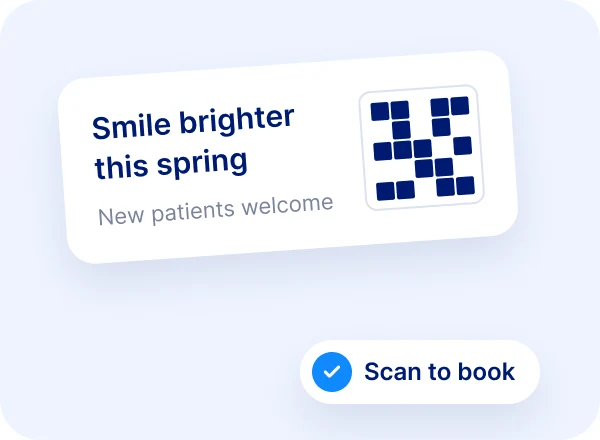
Scans. QR or short URL lands on a mobile page that matches the card
Books. Front desk knows the promo code and tracks source in PMS notes
What is dental direct mail?
Print and direct mail are physical pieces: postcards, letters, brochures, referral pads, in-office signage, that reach people in a specific geography or relationship to your practice. Direct mail targets households or segments (for example new movers within a radius). Good dental print is readable at arm's length, carries one primary offer, and uses QR codes or unique phone numbers so you can measure response. It works best when creative matches your digital brand so patients recognize you everywhere.
Why do dental practices still invest in print?
Mailbox and in-office pieces still drive recall and consults when the audience, offer, and tracking are sharp.
Dense neighbourhoods respond
Dense neighbourhoods and new mover streams still respond to tactile mail, especially for grand openings and reactivation.
Some patients see mail first
Older demographics and families may notice mailbox pieces before they scroll far enough to see your ad.
Print reinforces digital
Print reinforces digital: someone who saw your Meta ad may finally act when the postcard arrives.
Reactivation needs a nudge
Reactivation lists (patients overdue for hygiene or unscheduled treatment) often need a tangible nudge, not only email.
Leave-behinds support acceptance
In-office leave-behinds support treatment acceptance when paired with clear next steps.
Practices with geographic density goals, new locations, reactivation pushes, or brand consistency across physical and digital.
What do you need to start a print campaign?
Practical items so the program launches cleanly, nothing here is about selling extras you do not need.
What is included in print and direct mail?
Concrete outputs you can expect from an engagement shaped around your market.
How does a direct mail campaign work?
Three beats: discovery, build, and iteration, so expectations stay clear.
Objective
Who we are reaching, with what offer, and what action we want.
Design
Layouts tested for readability at mailbox distance.
Produce
Print partner coordination and quality checks on proofs.
How dental direct mail works in plain language
Technical detail in plain language, so you know what we are doing and why it matters for patients and platforms.
Formats and postal realities
Standard sizes (e.g. 6×9 postcard, letter in envelope) affect postage class and speed. We design within Canada Post friendly specs your printer recommends to avoid surprise surcharges.
Creative hierarchy at mailbox distance
Headline, single offer, proof point, and one CTA above the fold on the address side. Body copy supports the headline, it does not repeat it. QR codes include quiet zones and human-readable fallback URLs.
Lists and compliance
House lists from your PMS require consent and retention policies you own; we document how the campaign uses data. Purchased lists vary in quality, we advise where third-party data is worth it versus radius saturation.
What results can you expect from direct mail?
Plain-language signals we work toward, your market and capacity shape how quickly each shows up.
Which print mistakes should clinics avoid?
Patterns we see across dental markets, so you can sidestep them early.
Cluttered postcards with ten services and no single action.
Mismatch between mail offer and website landing page.
Tiny type and low contrast for older eyes.
No attribution plan, "we think it worked" is not a strategy.
Skipping proof approval and reprinting at full cost.
How do we measure print results?
Leading and lagging indicators agreed upfront, so progress is visible without hype.
Redemption of offer codes or unique URL visits.
Call volume spikes on tracked lines during mail windows.
Cost per booked appointment vs digital-only cohorts (honest comparisons).
Reactivation appointments attributed to list segments.
Reprint rate and proof revision counts (operational quality).
Reporting your team can act on, not a spreadsheet nobody opens.
Print and mail questions from dental owners
Direct mail has different constraints than pixels, questions we get in kickoff.
Saturation mailing vs a targeted list, how do you choose?
Saturation mail (Canada Post Neighbourhood Mail) reaches every address on selected routes and works well for a new clinic or a dense area around your office. Targeted lists, such as new movers or your own inactive patients, cost more per piece but usually respond better. Many clinics combine a small saturation radius with a targeted reactivation list.
Can we mail only apartment buildings near the office?
Partly. Route-based mailing lets you choose apartment or house delivery points on specific routes, but it cannot single out one building. For specific buildings, a list-based mailing or a door-hanger and lobby drop arranged with property management is more precise.
Do you design referral pads or in-office leave-behinds?
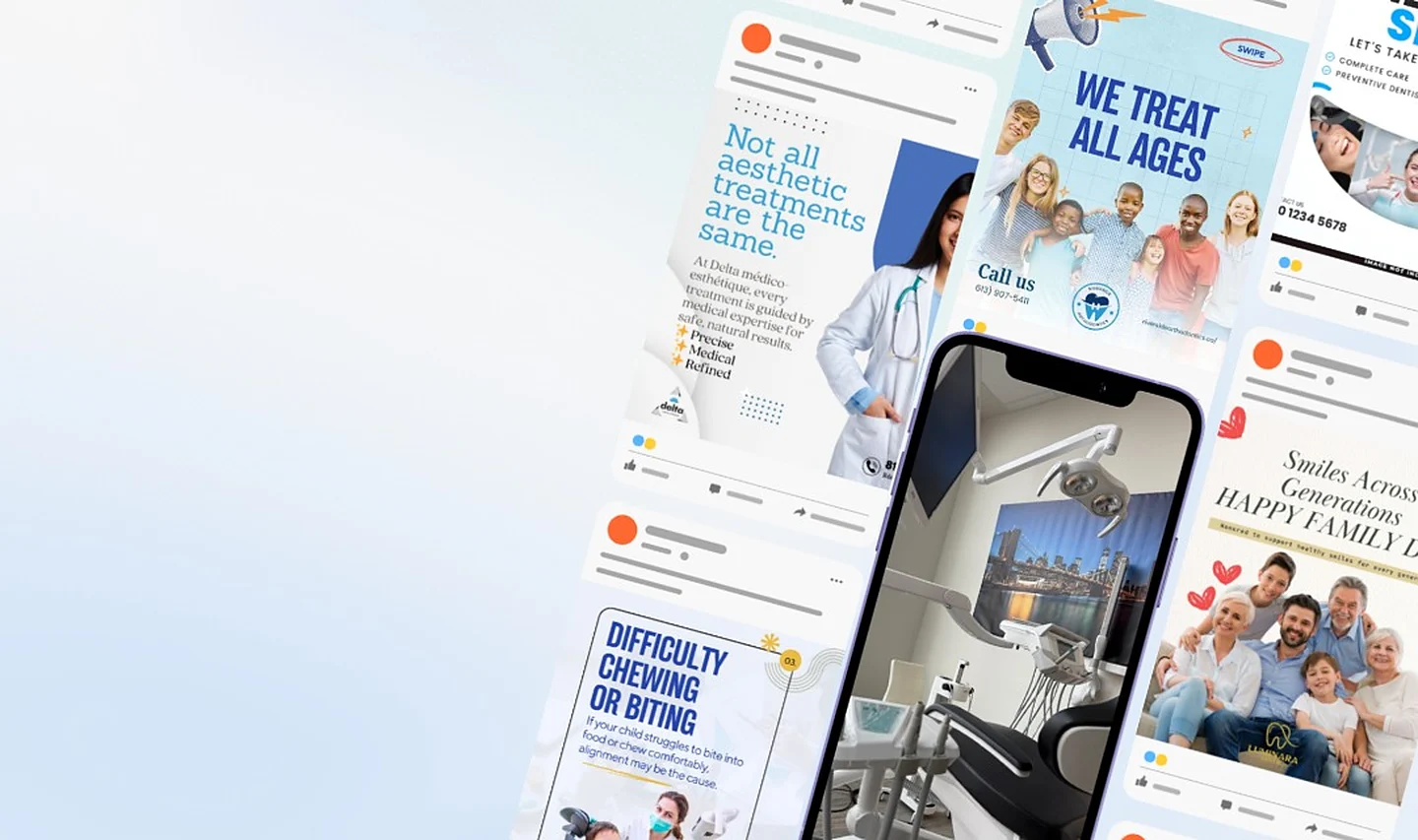
Yes. Referral pads, treatment plan folders, aftercare cards and appointment cards are designed in the same style as your website and mail, with a clear next step and a QR code where it helps.
How long from approved proof to in-home?
Typically 2 to 3 weeks: about a week for printing and preparing the mail, then several business days for Canada Post delivery. Seasonal peaks and larger runs can add time, so we plan mail dates backwards from the week you want calls to come in.
Bilingual postcard: English one side, French reverse, does that confuse people?
It can, because the address side has limited space and readers may think one side is missing information. In bilingual markets we usually prefer side-by-side English and French with the same offer and one QR code, or separate English and French versions by route when demographics are clear.
What offer tends to work: free whitening vs a paid consult credit?
It depends on the treatment you want to grow and your provincial advertising rules. Free whitening attracts volume but can bring bargain seekers, while a consult credit toward implants or Invisalign attracts fewer but more serious patients. We test one offer at a time and judge it by booked appointments, not response alone.
Who pays Canada Post or the mail house, you or us?
Printing and postage are paid by your clinic, either directly to the printer and Canada Post or billed through us at cost, whichever you prefer. Our fee covers strategy, design and coordination, and you see the full print and postage quote before anything is ordered.
How do we track calls and visits from a mailing?
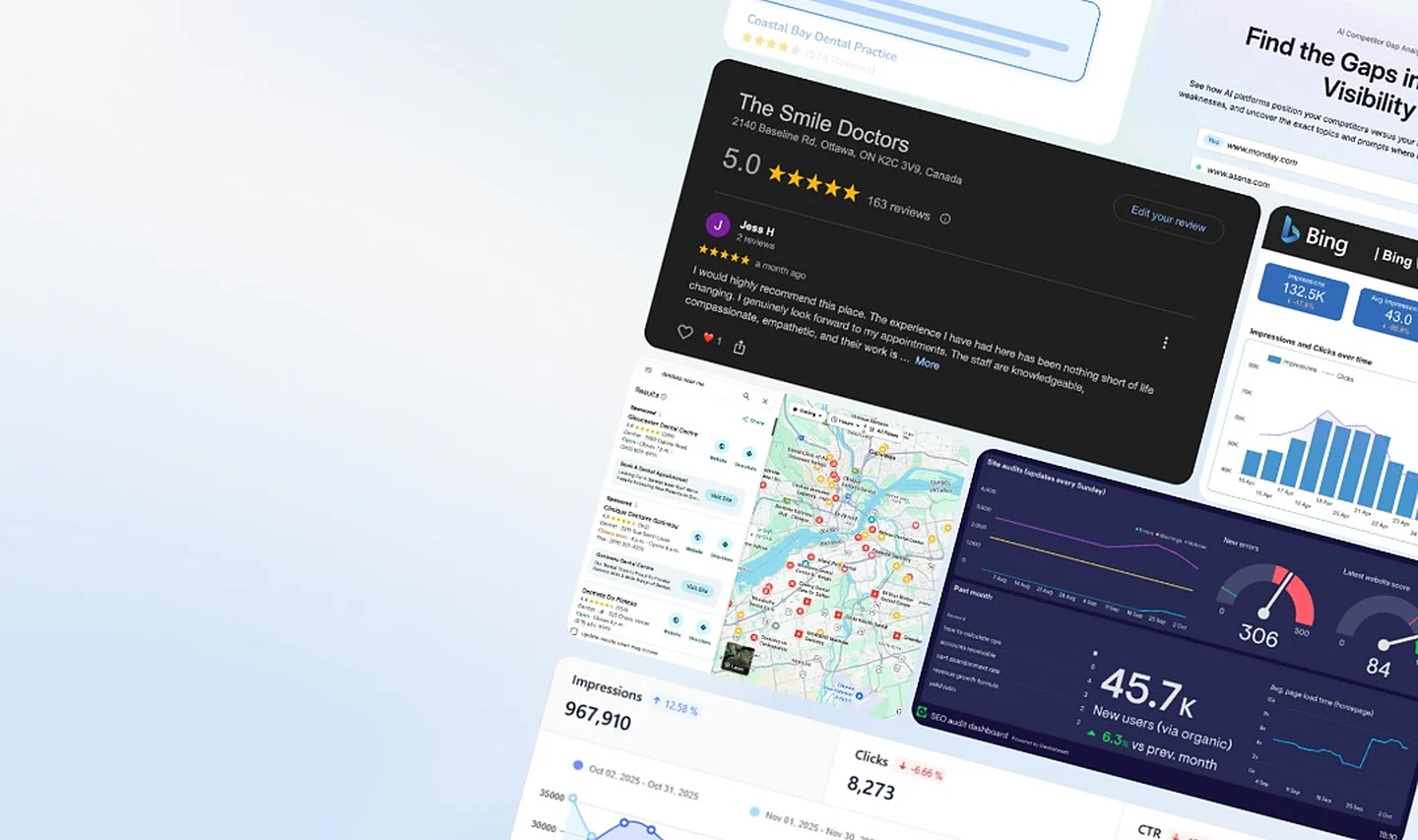
Each mailing gets its own tracked phone number, a QR code with campaign tags or a short URL, and a simple promo code. Your front desk notes the source in your practice software, and we match calls, landing page visits and booked appointments to each mail drop.
Ready to talk specifics?
Tell us about your market, services and goals. We will map a practical next step.