
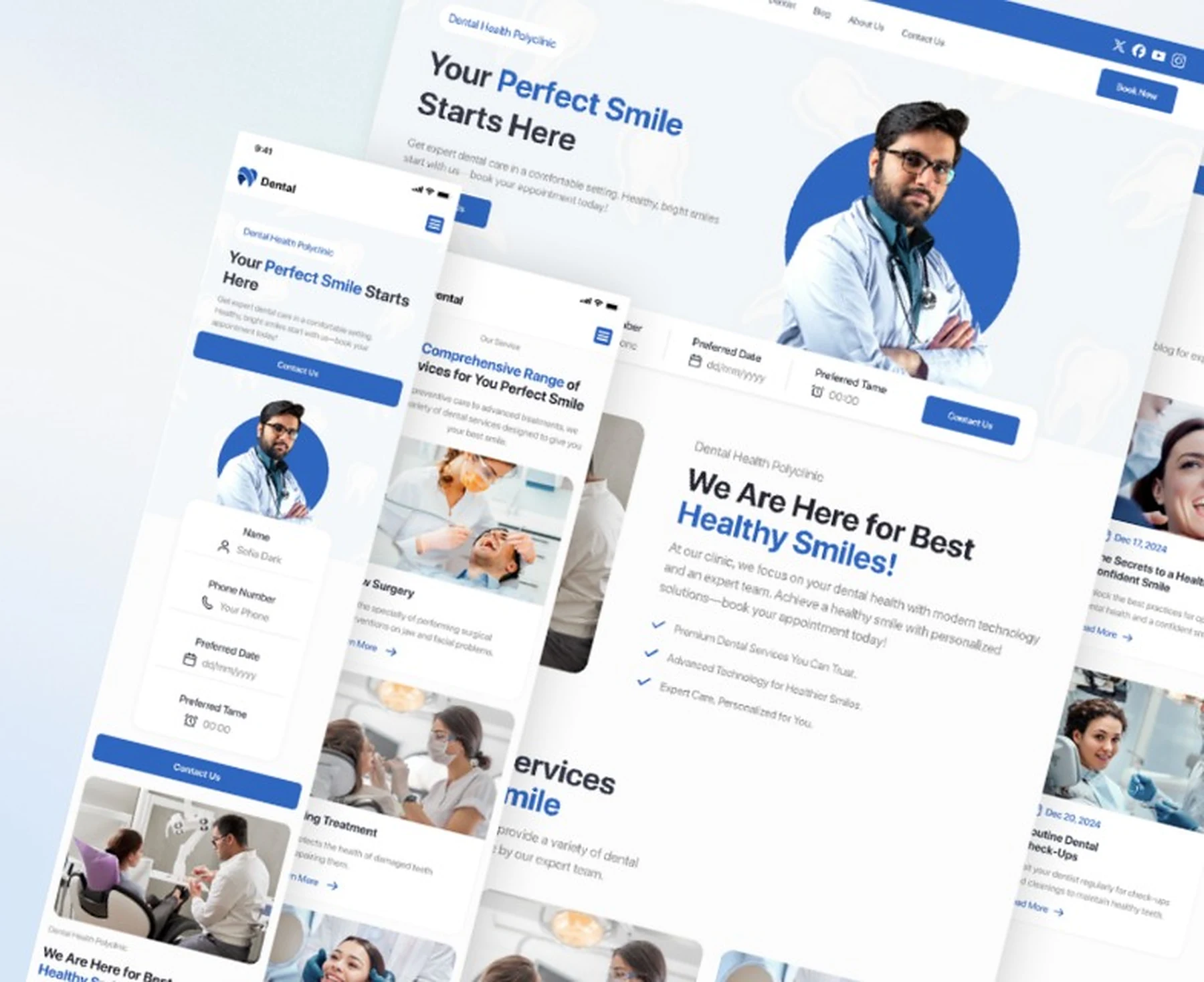
Custom dental websites that convert
Your front door online should feel as polished as your reception area.
What makes a good dental website?
A good dental website loads fast on phones, explains who you are and what you treat in plain language, and makes booking obvious on every page. It is built so Google and AI tools can read each service clearly, and it tracks calls and forms so you know where new patients come from.

Key takeaways
What your website has to do for your clinic
Your website is where search, ads, and referrals land, so it has to load fast, read clearly on phones, and make booking obvious. We structure pages around the procedures and locations you care about, wire analytics to real actions, and hand off with redirects and metadata handled so you do not lose equity from an old site.
What the first screen must accomplish on a phone
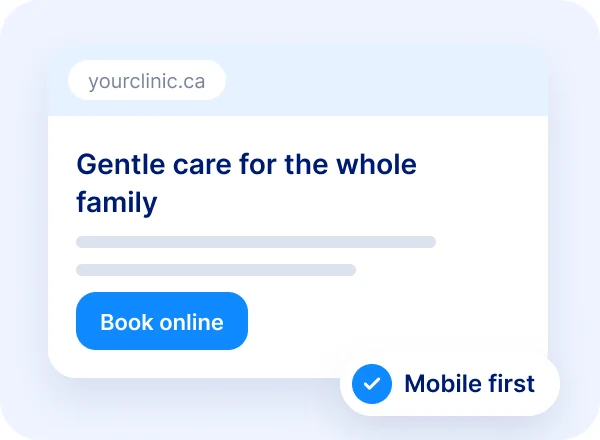
What is a dental website?
A dental website is your always-on receptionist: it explains who you are, what you treat, how to book, and why patients should trust you, usually on a phone screen first. "Custom" means information architecture, design, copy, performance, and analytics are built around your real services and markets, not a one-size-fits-all template that hides weak strategy behind stock photos. Technical quality (speed, accessibility, stable layout) affects both Google rankings and whether a nervous patient actually taps "Book."
Why do dental practices invest in a new website?
Search, ads, and referrals all land here, speed, clarity, and structure decide whether visitors book or bounce.
Most journeys end on your site
Most discovery journeys end on your site or booking widget; Maps and ads only start the conversation.
Patients compare in seconds
Patients compare 2 to 3 practices quickly; slow loads, cluttered navigation, or buried phone numbers directly cost appointments.
SEO needs crawlable structure
SEO and GEO programs need crawlable, well-structured pages; a pretty site that search engines cannot parse wastes downstream marketing spend.
Relaunches need redirect plans
Relaunches go wrong without redirect plans, losing years of link equity and causing confusing AI summaries.
Accessibility is good UX
Accessibility is both the right thing and increasingly aligned with good UX: contrast, focus states, readable type.
Practices launching new brands, redesigning dated sites, or opening additional locations that need a credible digital flagship.
What do you need to start a website project?
Practical items so the program launches cleanly, nothing here is about selling extras you do not need.
What is included in a custom dental website?
Concrete outputs you can expect from an engagement shaped around your market.
How is a dental website built?
Three beats: discovery, build, and iteration, so expectations stay clear.
Positioning
Services, differentiation, and the story patients should feel in the first screen.
Design & build
Iterative layouts, content integration, and technical implementation.
Launch & learn
Post-launch fixes, heatmaps optional, and hooks for SEO, GEO, and ads.
How a dental website works in plain language
Technical detail in plain language, so you know what we are doing and why it matters for patients and platforms.
Information architecture and UX
We map primary journeys: new patient general, emergency, cosmetic consult, ortho parent, implant second opinion, etc. Each journey gets obvious next steps and minimal cognitive load.
Navigation depth is balanced: enough pages for SEO/GEO, not so many that patients get lost.
Performance and Core Web Vitals
Largest Contentful Paint (LCP), Cumulative Layout Shift (CLS), and Interaction to Next Paint (INP) describe real user experience. We optimize images, font loading, lazy loading discipline, and third-party scripts (chat, analytics) so they do not tank performance.
SEO/GEO-friendly templates
Semantic HTML headings, descriptive title tags and meta descriptions, internal linking blocks, and FAQ sections where they reflect real patient questions, all support discovery.
Migration: 301 redirect maps from old URLs, update of XML sitemaps, and Search Console monitoring catch soft 404s early.
Analytics and consent
We wire events to meaningful actions: click-to-call, form start/submit, online booking clicks. Where Canadian privacy laws require consent banners, we coordinate with your counsel's guidance on configuration, not one-size-fits-all legal advice.
What results can you expect from a new website?
Plain-language signals we work toward, your market and capacity shape how quickly each shows up.
Which website mistakes should clinics avoid?
Patterns we see across dental markets, so you can sidestep them early.
Auto-playing video or huge hero carousels that hurt LCP on mobile.
Hiding the phone number behind multiple taps on mobile.
Duplicating the same service copy across "city pages" with only the city name swapped.
Launching a new site without redirect mapping from old URLs.
Installing five marketing pixels with no owner, slowing the site and breaking attribution.
How do we measure website results?
Leading and lagging indicators agreed upfront, so progress is visible without hype.
Core Web Vitals field and lab trends after launch.
Conversion rate on primary CTAs by traffic source.
404s and redirect chains from Search Console.
Scroll depth or engagement on key procedure pages (where tools allow).
Organic and paid landing engagement before/after redesign milestones.
Reporting your team can act on, not a spreadsheet nobody opens.
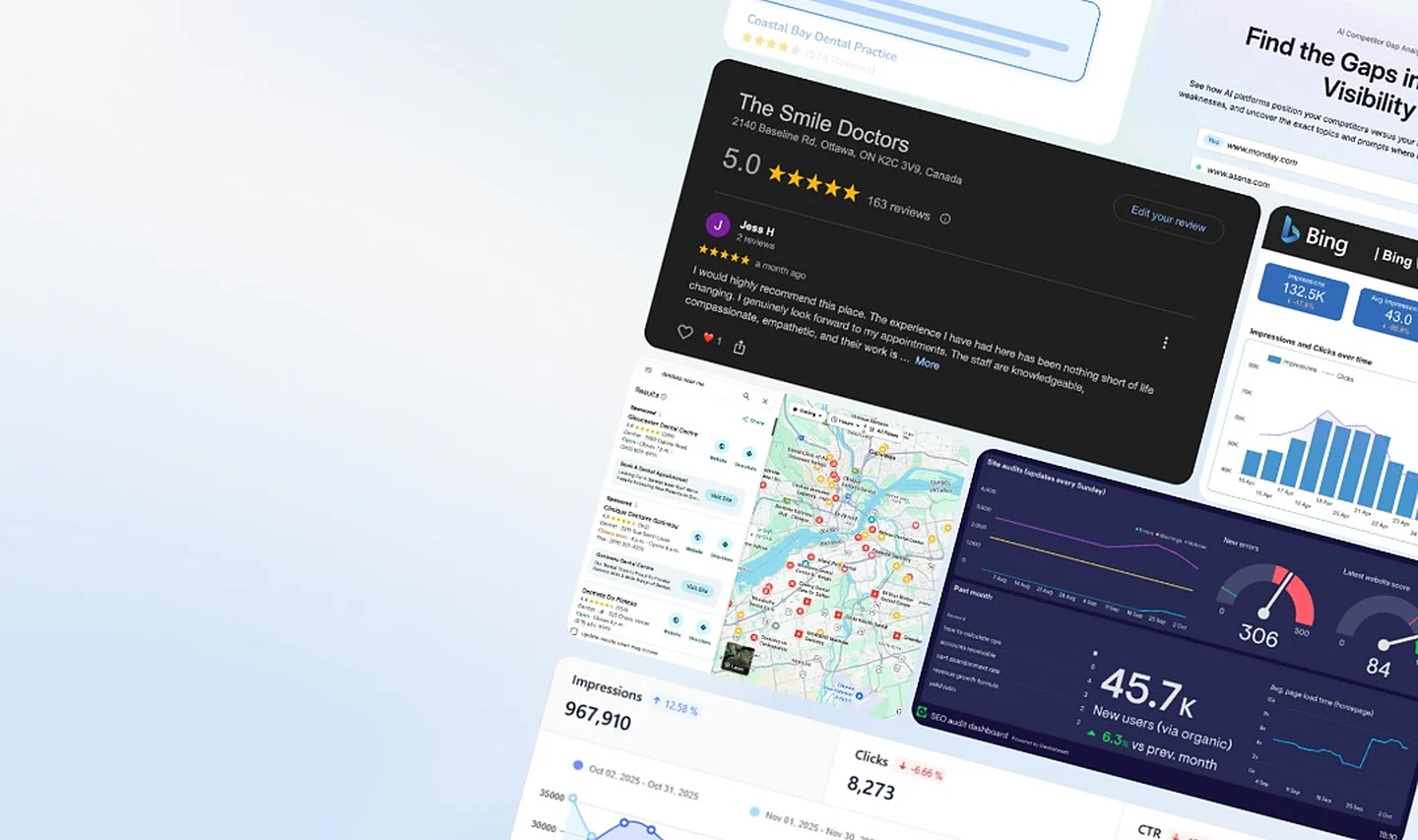
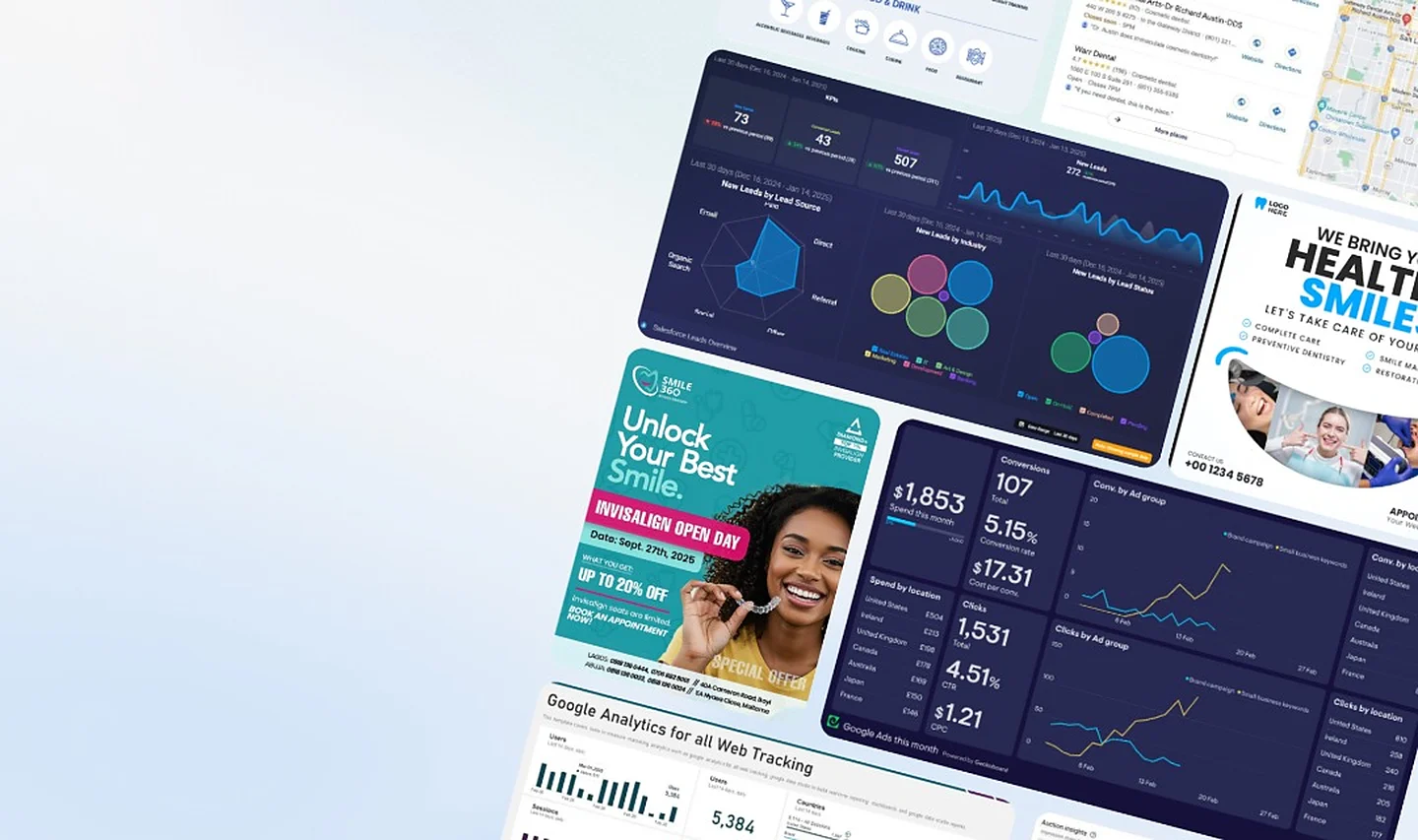
Website questions from dental owners
Technical and UX decisions that affect every channel downstream.
Can you embed our existing online booking widget without breaking Core Web Vitals?
Usually yes. We load third-party booking scripts only where they are needed, defer them until the page is ready, and reserve space so the layout does not jump. If a widget is very heavy, we link to a dedicated booking page instead of loading it on every page.
What happens to old blog URLs if we delete thin posts nobody reads?
We review traffic and links for each old URL first. Posts worth keeping are improved, weak ones are merged into a stronger page or removed with a 301 redirect to the closest relevant page, so visitors and search engines do not hit dead ends.
Webflow vs WordPress vs "headless", how do you choose?
We choose based on who will edit the site, which integrations you need and how much maintenance you want to own. Webflow suits most clinics that want fast, secure pages their team can update without plugins. WordPress makes sense when you depend on specific plugins, and headless setups are for larger groups with developers on staff.
Do you use reusable layouts or bespoke every page?
Both. Core templates for services, locations, team and blog are designed once and reused, which keeps the site consistent and easy to update. Key pages like the homepage and flagship procedures get custom layouts where the story needs it.
Separate "mobile menu" experience vs one long homepage, which do you recommend?
We recommend a clear mobile menu with a short list of priority services plus a homepage that answers the main questions in order. Call and book stay visible on every screen, so patients never have to scroll back to the top to act.
Do you design toward WCAG 2.1 AA for public-sector or grant-funded clinics?
Yes. We design and build toward WCAG 2.1 AA: colour contrast, keyboard navigation, focus states, alt text and readable type. Formal compliance testing or certification can be added when your funder or contract requires it.
Who owns DNS and can we keep our registrar?
You own your domain and DNS, and you can keep your current registrar. We only need temporary access, or someone on your side, to update the records at launch. Account details and the changes we make are documented for you.
How long does it take to build a new dental website?
Most clinic websites take 6 to 10 weeks from kickoff to launch, depending on the number of pages, content readiness and approval speed. Multi-location sites or projects with new photography and copy usually take longer, and you get a timeline before work starts.
Ready to talk specifics?
Tell us about your market, services and goals. We will map a practical next step.