
Paid search & social ads for dental clinics
Buy intent you can measure, not clicks that disappear into a black box.
What is paid advertising for dental practices?
Paid advertising for dental practices means buying ad placements on Google Search and on social platforms like Facebook and Instagram, so patients looking for a treatment see your clinic first. It works when every ad leads to a matching landing page and every call or form is tracked and answered quickly.

Key takeaways
How paid ads bring patients to your clinic
Paid media works when the promise in the ad matches the landing experience and someone answers the phone or form quickly. We structure accounts for the procedures you want, set honest tracking, and review performance in language your front desk and leadership can use. You own the ad accounts; we document structure so you are never locked in.
Economics we align before turning spend on
What is paid advertising?
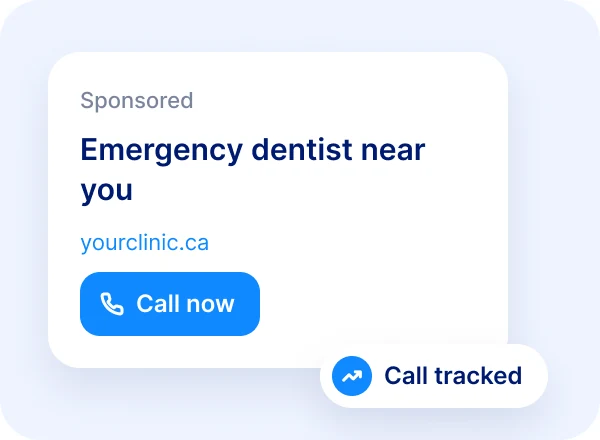
Paid advertising for dental practices usually means buying placements on Google (Search, sometimes Performance Max, Display where appropriate) and Meta (Facebook and Instagram). You pay when someone clicks or when the platform delivers impressions, depending on the objective. Unlike organic SEO, paid media can put you in front of intent immediately, but only if tracking, offers, landing pages, and front-desk follow-up are aligned. The goal is not "traffic"; it is qualified conversations you can book.
Why do dental practices invest in paid ads?
When you need demand now, defend your brand in the auction, and see cost-per-lead, not vanity clicks.
Fill chairs while SEO compounds
Organic visibility takes time; paid fills chairs while SEO and reputation compound, especially for high-value procedures with long research cycles.
Defend your brand
Competitors bid on your brand and category terms; absence from paid auctions can mean you never appear for the most valuable clicks in your city.
Know what produces patients
Without conversion tracking, you cannot tell which ads, keywords, or audiences actually produce patients, so budgets drift to waste.
Fix the leaks after the click
Slow phone answer or a weak booking page silently burns ad spend; the platform still charges for the click.
Run controlled seasonal pushes
Seasonal pushes (whitening, ortho consults, implant seminars) need controlled tests with clear start and end, not vague "always on" spend.
Practices ready to invest in paid demand with realistic targets, fast follow-up, and willingness to test offers and landing experiences.
What do you need before ads go live?
Practical items so the program launches cleanly, nothing here is about selling extras you do not need.
What is included in paid ads management?
Concrete outputs you can expect from an engagement shaped around your market.
How does a paid ads campaign run?
Three beats: discovery, build, and iteration, so expectations stay clear.
Fit & goals
Margin, capacity, and which procedures can sustainably support acquisition cost.
Launch foundation
Tracking, landing paths, and creative that match the promise in the ad.
Scale & refine
Lean into what converts; cut waste without hiding the truth in dashboards.
How dental ad campaigns work in plain language
Technical detail in plain language, so you know what we are doing and why it matters for patients and platforms.
Search intent and campaign structure
Search campaigns should separate high-intent themes (e.g. "emergency dentist," "dental implants [city]") from broader research queries. Match types, negatives, and search term reviews prevent paying for irrelevant clicks like unrelated jobs or geographies you do not serve.
Performance Max and broad match can work when fed clean conversion signals and strong creative; they are not a substitute for strategy when tracking is weak.
Tracking that matches real dentistry
We wire primary conversion actions to calls, form fills, and booked appointments where technically possible, often via call tracking numbers, CRM tags, or offline conversion imports from your PMS export (scoped to what your compliance allows).
UTM hygiene matters: consistent naming lets you compare Meta vs Google vs organic downstream in analytics.
Landing experience and creative
The headline on the landing page should echo the ad promise. Mismatch is the #1 silent killer of quality score and conversion rate.
Creative for dental must stay within professional and regulatory tone: before/afters, testimonials, and offers need your approval and sometimes college guidance, we build review cycles into production.
Budget, learning phase, and pacing
Platforms need enough conversion volume to optimize. Micro-budgets across too many campaigns starve learning. We recommend consolidation until signals stabilize, then expand.
What results can you expect from paid ads?
Plain-language signals we work toward, your market and capacity shape how quickly each shows up.
Which paid ads mistakes should clinics avoid?
Patterns we see across dental markets, so you can sidestep them early.
Optimizing for clicks or impressions instead of booked consults or new patients.
Sending all traffic to the homepage instead of procedure-specific landers.
Ignoring negative keywords until thousands are wasted on "jobs" or "free" intent.
Letting multiple vendors retarget the same users with conflicting messages.
Turning off campaigns every time the schedule is full, then losing algorithmic history.
How do we measure paid ads results?
Leading and lagging indicators agreed upfront, so progress is visible without hype.
Cost per qualified lead and cost per booked consult (definitions agreed upfront).
Search term and placement quality, what you actually paid for.
Call answer rate and booking conversion from tracked calls.
Return on ad spend (ROAS) only where revenue attribution is honest, not fabricated.
Creative fatigue signals: frequency, CTR drops, rising CPA on Meta.
Reporting your team can act on, not a spreadsheet nobody opens.
Paid ads questions from dental owners
Paid search and paid social each have different rules, here is how we think about them for dental.
What is "brand defense" on Google and when is it worth paying for?
Brand defense means bidding on your own clinic name so your ad shows first when people search for you. It is worth paying for when competitors or directories bid on your name, or when your organic result sits below Maps and other listings. Clicks on your own brand are usually cheap, and we check search terms so you do not pay for visits you would get anyway.
Can we attribute implants to a keyword without recording every phone call?
Yes. Call tracking numbers log the source, time and length of each call without recording the conversation, and form and booking events are tracked on the site. Your front desk tags booked implant consults in a simple sheet or your practice software, and we match them back to campaigns. Recording stays optional and only with clear consent.
Is $2,000/month enough to test implants and emergency at the same time?
It can be tight. Implant and emergency keywords often cost more per click in Canadian cities, and splitting a small budget across two goals slows learning for both. We usually start with the service that brings the most value per patient, prove the cost per booked consult, then add the second. You get realistic numbers for your market before launch.
Who owns the ad accounts if we part ways?
You do. Ad accounts, tracking and data are set up under your business, with us added as managers. If we part ways, you remove our access and keep the full history, campaigns and audiences. We also document the account structure so another team can continue without starting over.
Are dental campaigns subject to Meta special ad category rules?
Usually not: Meta's special ad categories cover housing, employment, credit and social or political issues. Health-related ads still have limits, though. Meta restricts targeting based on health topics and reviews health claims and before-and-after images. We plan audiences and creative within those rules and within provincial dental advertising guidelines.
How do you stop ads from showing for "free dental" or job seekers?
With negative keywords and regular search term reviews. We exclude terms like "free", "jobs", "hiring", "school" and "course" from the start, then review real search terms weekly in the first months and add new exclusions. Location and audience settings keep ads in front of people who can actually book.
When would you run Meta only and skip Google Search?
When there is little search demand yet: a new treatment, a grand opening, or elective care like whitening and Invisalign that people need to discover first. Meta also works well for reactivating past patients and local awareness. For urgent needs like emergency dentistry, Google Search almost always comes first.
How soon can we see new leads after ads go live?
Search campaigns can bring calls in the first days after launch, as long as tracking, landing pages and someone answering the phone are ready. Meta usually needs one to three weeks to learn. We judge results on cost per booked consult over the first 30 to 60 days, not on day one.
Ready to talk specifics?
Tell us about your market, services and goals. We will map a practical next step.